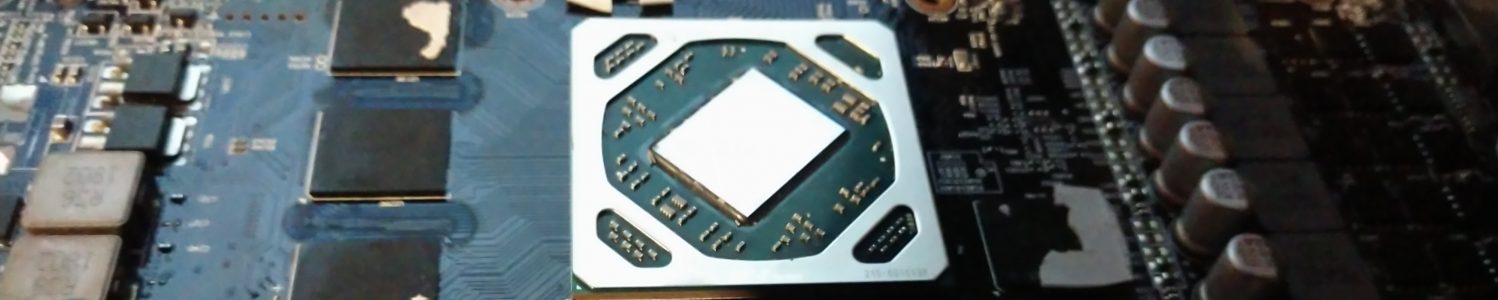
Upgrading an old ass Emachine

Today we’re looking at a system from a now defunct (I think) OEM, eMachines. The model number is ET1331, which according to cnet.com is manuifactured by Acer. I don’t know if that’s true I just thought it was interesting.

Here’s the standard specs on the day you bought it back in the day:

Processor: AMD Athlon(tm) II X2 235e 2.7 GHz
RAM: 6.00 GB DDR2 800
Chipset: NForce 430 MCP61
Graphics: GeForce 6150SE
Hard Drive: 750 GB SA TA 3.0 Gbps
OS: Windows 7 Ultimate 64-bit

I’ll go over the upgrades we make later, but this is where we’re starting.


From my first IBM Aptiva to my current gaming PC, I’ve always loved the world of PC gaming, it’s nothing like console gaming in my opinion. It’s always been more of a wild west, an intellectuals refuge, the fringes found their friends here, and we all played Counterstrike 1.6.

(This is just copy-pasted from my script for the video on this I made, I’m that lazy, but it sounds better as a dry joke as opposed to just reading it and thinking I’m serious.. or as reddit would say /s)

But for at least 5 years leading up to 2009 I was without a PC, I had packed up everything I owned, fell in love with a girl, and moved to a different part of the world. Sure I had a playstation 3 and the complete box set of The Venture brothers, but something was missing.

Then, as all things good, my adventure in a far off land came to an end, and I had to come back home with my tail between my legs. But there is always a silver lining on clouds like these, and that silver lining was Emachine.

One day, as I was sulking around my cousins aparment while they went to college, I got a phone call, it was my brother. And he was excited. “Jake he said (my name is jake by the way) Jake he said, Remember counterstrike? We should all buy computers, and play that again!” and so that’s what we all did., me my brother and at least 3 or 4 of my cousins all invested in building gaming computers, and I used the 2009 Wal-mart Emachine special you see before you today. Sure I don’t have it in a case, but that’s because there is just no way to contain the raw horsepower this machine exudes as you power it up and strap in for the ride of your life.

Or that’s how it felt in 2009.

The memory that stands out the most for me from these times is skyrim, though that was some years later, it was played on this very system. Though I loved morrowind for its breadth and scale, and oblivion for its story, Skyrim was just beautiful to look at,and for the first time I could turn my settings all the way up.

Anyway on to the specs.

The motherboard we have today is an AM2+ platform, holding 8gb of 666mhz (praise satin rugs) DDR2 ram the model number is MCP 61 PM-GM revision 2.2. if you’re going out buying old motherboards like this, always look out for bulging or leaky caps.

The CPU is the athlon x2 235e with its 2 core 2 threads clocked at 2.7 ghz, with a tdp of just 45 watts, which makes this thing a breeze to cool, especially since the BIOS is locked down. Though I’ve been doing some research and we may be able to unlock these suckers, it will have to wait for another episode.

The GPU’s are, like I mentioned earlier the GTX 460, we’ll be using the 1gb 256bit model today, and the 8gb rx 580 from gigabyte. We’ll keep the rx 580 stock, but this gtx 460 is overclockable as hell, so we’re gonna have to have some fun with this later down the line.

I’ll be doing another video with these 2 cards where I go over them in more detail, I’ll include a link down below if its available.

For our benchmarks today we’re going to look at a few older games, and a few newer games though I was unable to find my copy of skyrim, I dont own it on steam, I have it on DVD, but we’ll fix that here soon I promise… anyway we’re going to look at some older stuff and some newer stuff just to show you what this thing is capable of.

First up we have Furmark, which is a purely GPU bound benchmark if there ever was one, and will give us context for the rest of the benchmarks that we’re looking at today.
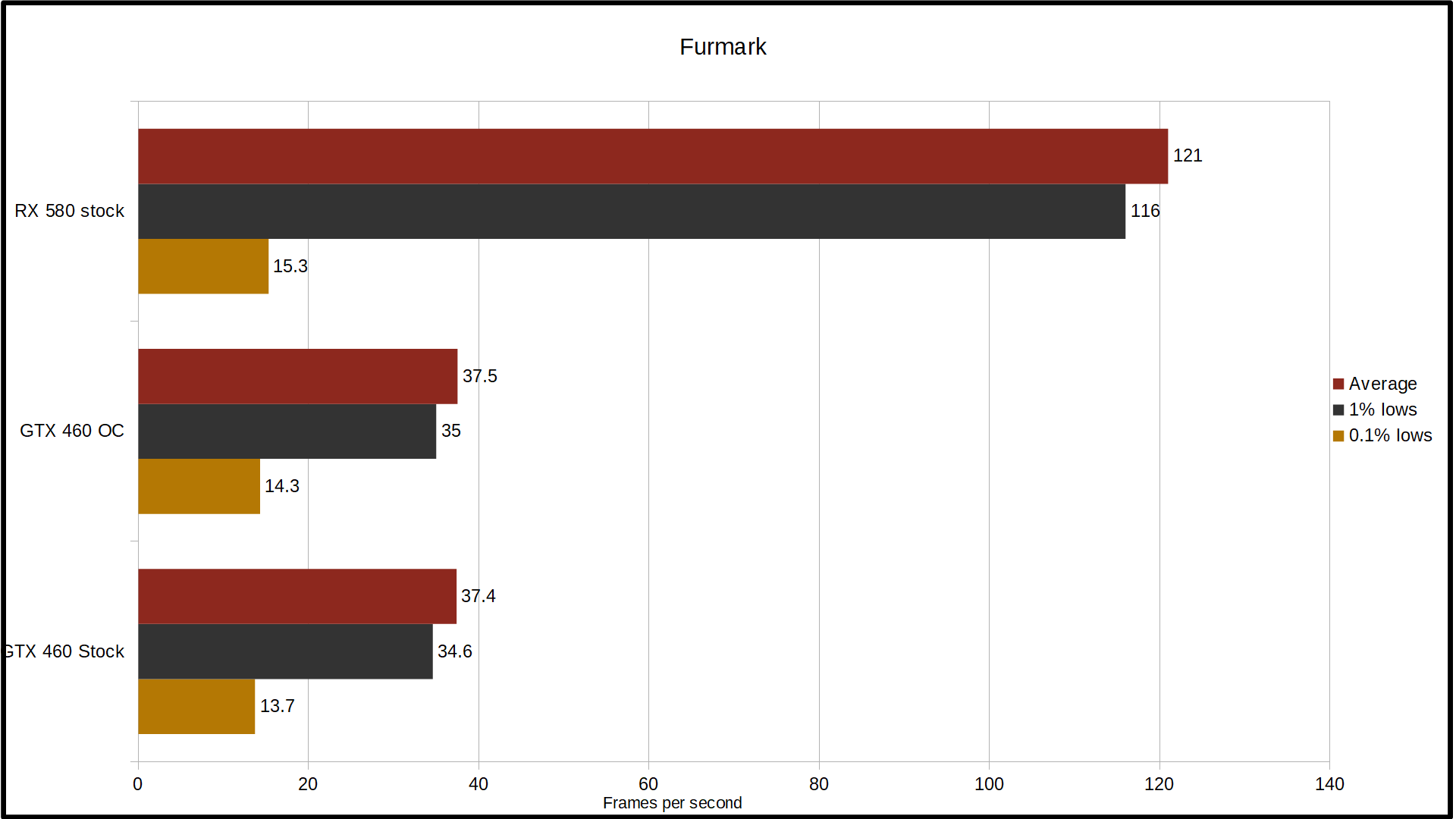
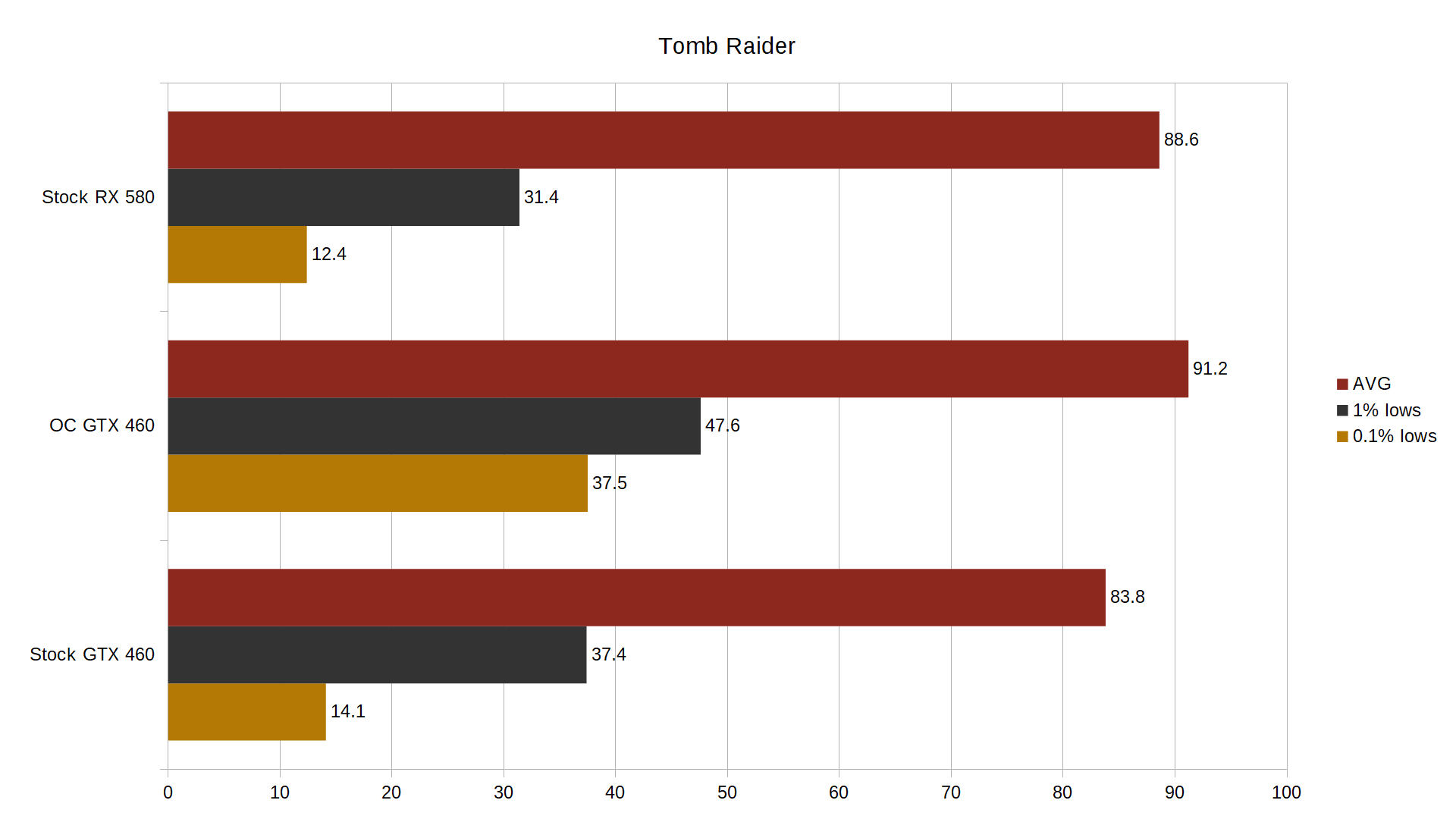
Next we’ll look at Tomb Raider, which is playable and runs in the 50fps average range, this benchmark is not indicative of in game performance at all.

We’re in a situation where the cpu is hitting 100 percent, causing the GPU to become starved for frames to execute. This is never not going to be a problem with 2 core, 2 thread systems here on forward unless you want to move away from windows 10.
on a side note, if you’d like to see how much performance we’re losing between windows 7 and 10 leave a comment and we will take a dive into what 2 cores can do in each os.

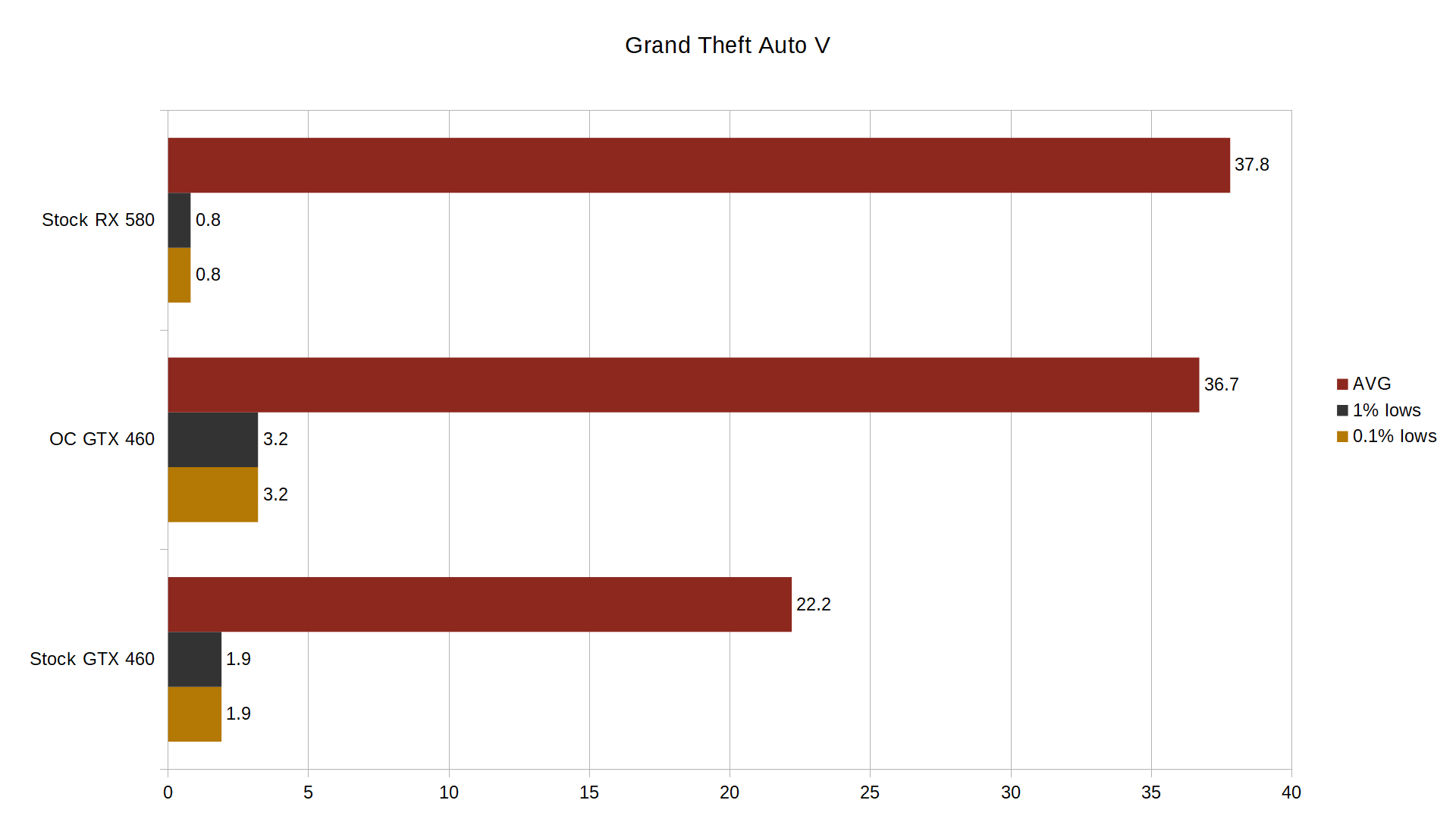
Now we’ll move onto GTA5 and this game was unplayable no matter what settings I used. This is another example of CPU bottleneck, and in this instance, no matter what settings I used, and I mean no matter which ones I used, high low, medium any… the CPU is such a bottleneck that performance stayed the sames, so at least its consistent.

I couldn’t get the Benchmark to finish. I think this would manifest as a VRAM shortage if we had a 4 core system, but this 2 core system just struggles, plain and simple.
We’ll dig deeper into this 2 core phenomenon with an intel core 2 duo I own, which Is probably twice as fast as this thing. I’m interested to see how it will perform in gta5

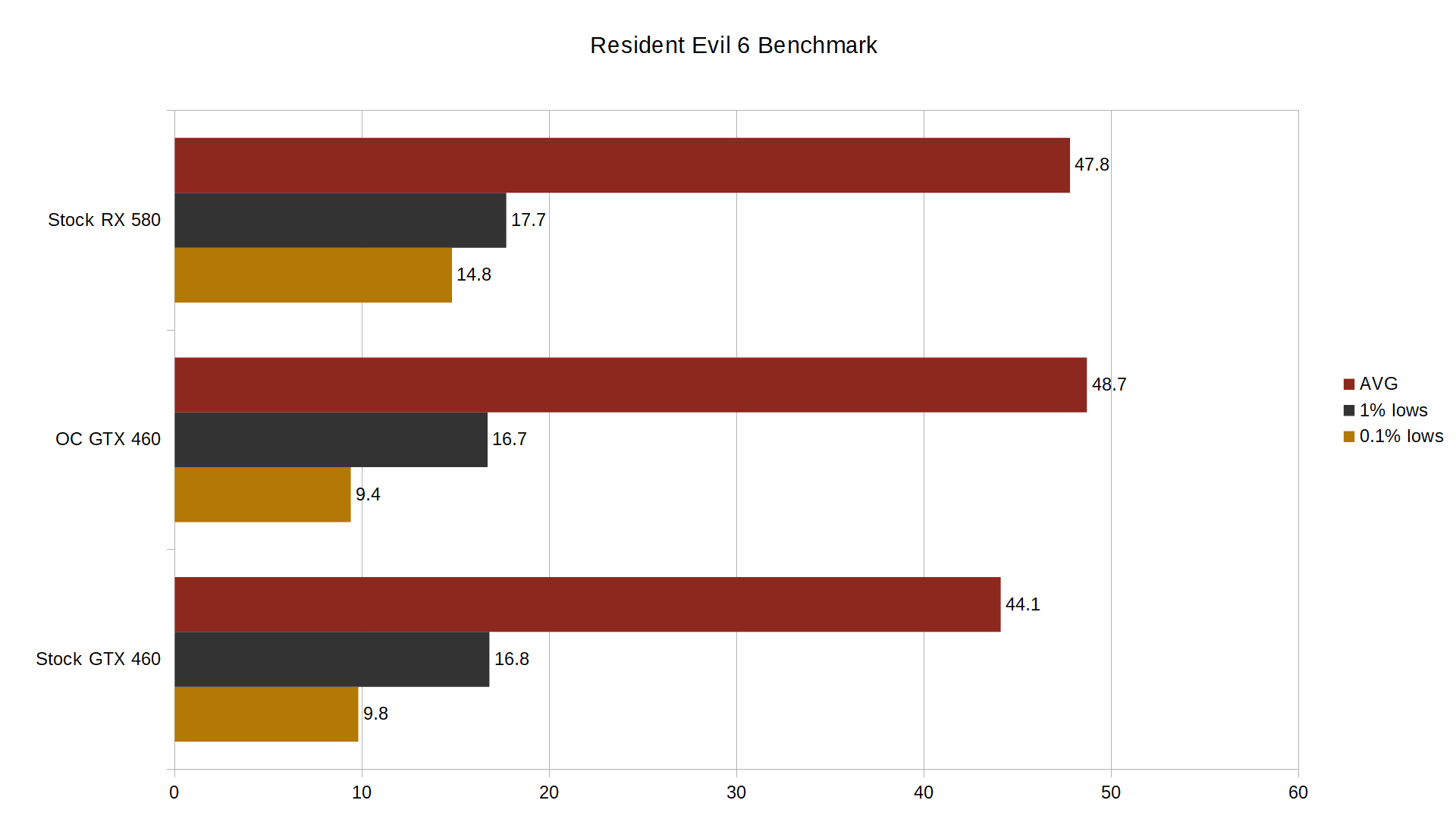
On to Resident evil 6 and I feel like I’m repeating myself here, but this is a game benchmark that seems to run quite well, well enough anyway that if you wanted to play resident evil 6 with this system configuration, you might be able to get away with it.
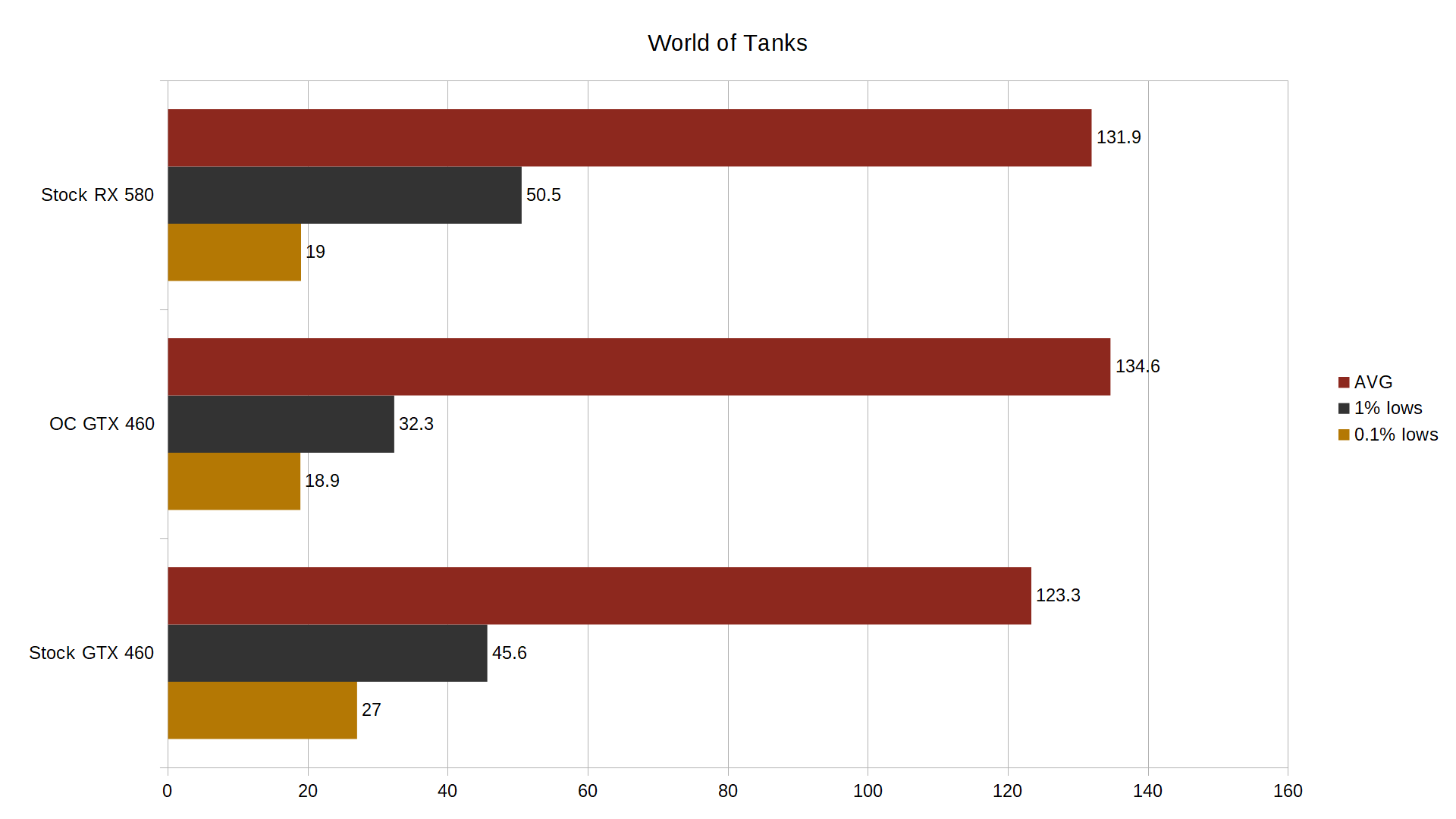
Now here’s my favorite benchmark, maybe because its the funnest to watch… but World of tanks canned benchmark is another example of a newer title that runs just fine with a cpu from 2009, I haven’t tried actual gameplay because I didnt think of it.. yeah… anyway
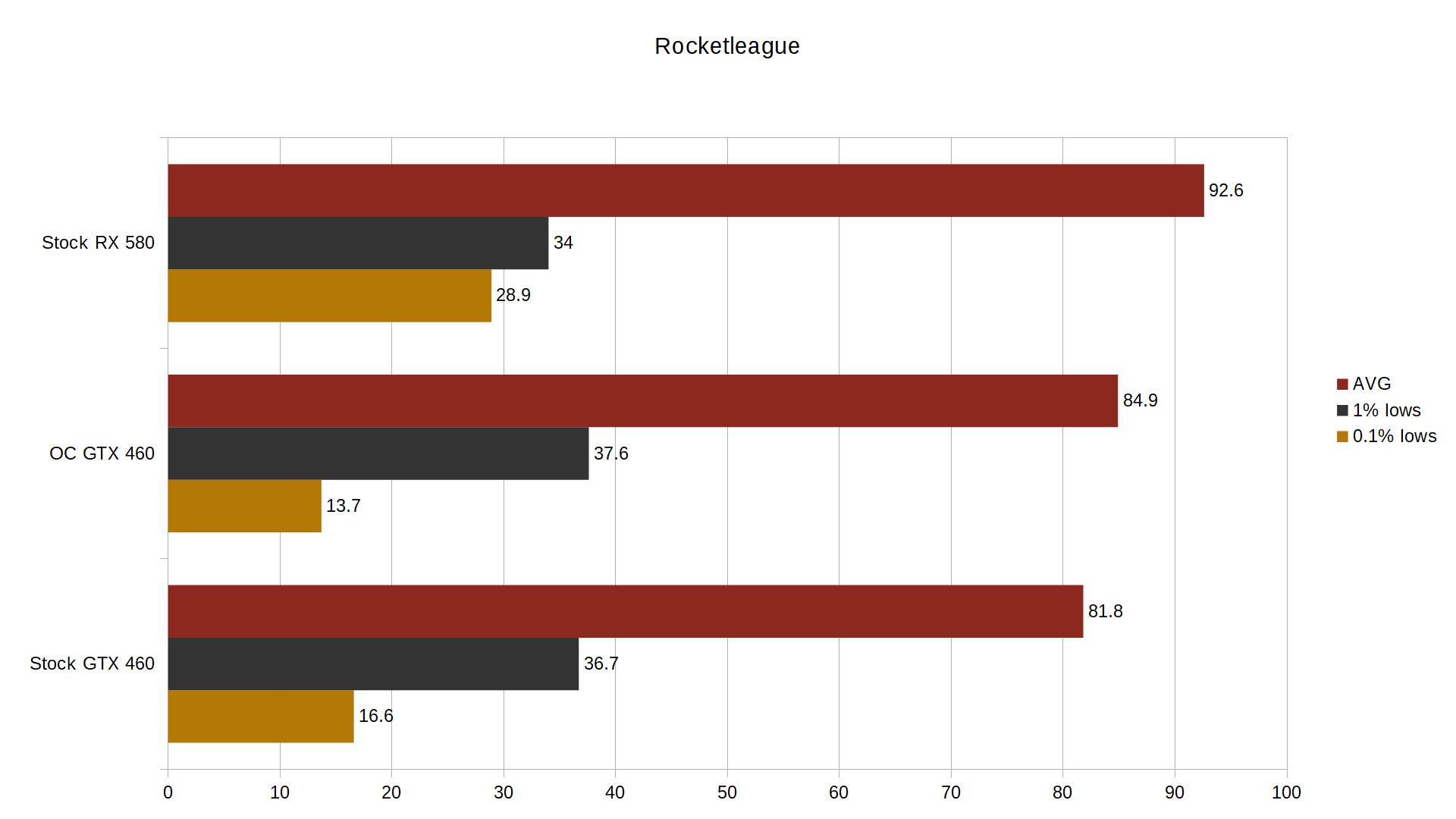
up next we have another title thats playable on this old of a configuration, and that’s rocket league, just like elsewhere, we can see that the bottleneck is the cpu and if you want any gains, you’ll have to look into upgrading or overclocking.
A couple things I’d like to mention, 1 is that I think overclocking on this motherboard is possible, I’ve seen a guide online on how to do it, the only problem is I’m having trouble getting the software to run inside of windows 10 natively so I think we’ll have to try and get windows xp up and running on my old Pentium 4 machine, use that to create the boot media to flash the BIOS, and go from there.

Or maybe not, I’ll try and get it to work with windows 10, and it seemed to work once, but then when I accidentally formatted my drive I couldn’t get it to work again.

And number 2, is that if overclocking isn’t a possibility on a locked motherboard like this, there is always upgrades, and upgrades are cheap for stuff like this. The only problem is again, the BIOS. With a motherboard manufacturing these parts for OEM’s, chances are the bioses had a limited range of CPU support, but I’ve got a athlon x4 which will most likely work, an x6 which who fucking knows, and a phenom, which I’m almost positive will not work on this motherboard,but we’ll have fun trying.

Until then I think what we’ll do is take these same 2 graphics cards and put them into a modern 6 core 12 thread system to put the bottleneck on the GPU, at least for the 460, and show just how much of a performance differential is occurring between a 2012 build and a 2018 build.

(edit here: I ended up selling this system for a bit of a profit for a video about reselling old systems for profit, I’ll post an article about it as well, but I can’t do the test on the 460 anymore because I don’t own it. I’ll eventually buy a new one)

A History of the Toshiba Satellite line of laptops.

This is sort of a condensed version of my series on the Toshiba satellite over on my youtube channel.

In fact, I’m lazy, and I admit it, this is mostly just fancy copy and pasting. But dare I say, read on if the history of average laptops interests you a little bit!

The Satellite line of laptops under manufacturer Toshiba have a history of being a viable and often times more value oriented alternative to IBM’s mid to low range thinkpads. Just like the IBM’s large product stack, Toshiba’s laptop Models have always varied wildly, from the mid range AMD APU powered units, like the one we’re going to rebuild in this series, all the way up to full fledged pro level units marketed under the added label “Qosmio”. These larger units offered some staggering specs for their age and even implemented dual GPUs in at least one SKU.

Toshiba’s laptops have always been market leaders in one form or another, starting with the Worlds first mass market laptop in the T1100 which was released in 85, had network connectivity as an optional upgrade, and weighed in at 9 pounds, or 4Kg in non freedom units. God I hate that joke. But here it is, in the middle of this video. The T1100 cost you a princely 4 grand in 1985 and if we adjust for inflation it comes to just under 10 grand!

A few other notable achievements for Toshiba’s laptop division include :

First laptop with a TFT or thin film transistor display, which they managed to pull off in 1991, though the technology was invented in 86, it was prohibitively expensive for a long time, and the integration into laptop displays no doubt helped lower the price of these CRT alternatives.

They also claim to have the first laptop to come with a CD-ROM drive in 95, which is quite impressive. I had a 98 IBM thinkpad with a CD-ROM drive, and I thought I was on top of the world at the time. Little did I know toshiba had been flaunting one for a few years before I ever got to experience the glory of a laptop device.

Not only did they have the first laptop with a CD-Rom but they also managed to have the first laptop with a DVD drive in 1997 with their libretto 50 which weighed in at just 1.9 pounds, or just under 9/10ths of a kilo.

By 1998 they where they where boasting to have the World’s smallest, lightest, most portable computer designed to run windows 95 or NT in the libretto 50 refresh, the aptly named libretto100CT. Packing a 166MHz Pentium 2GB harddrive, options for modem or CD-Rom and coming in under 2500 1998 dollars, it was a huge success in the Asian markets where Toshiba’s name was synonymous with laptops.

By far the most notable event in the Toshiba Satellite laptop lineup happened in 1998 as well. The very first presidential email was sent with a Toshiba Satellite Pro. On November 7th 1998 Bill Clinton Emailed John Glenn as he was aboard the SpaceShip Discovery in response to en email John had sent to Bill earlier in the week which read:

Dear Mr. President,

This is certainly a first for me, writing to a President from space, and it may be a first for you in receiving an E mail direct from and [sic] orbiting spacecraft.

In any event, I want to personally thank you and Mrs. Clinton for coming to the Cape to d/see [sic] the launch. I hope you enjoyed it just half as much as we did on board. It is truly an awesome experience from a personal standpoint, and of even greater importance for all of the great research projects we have on Discovery. The whole crew was impressed that you would be the first President to personally see a shuttle launch and asked me to include their best regards to you Hillary. She has discussed her interest in the space program with Annie on several occasions, and I know she would like to be on a flight just like this one.

We have gone almost a third of the way around the world in the time it has taken me to write this letter, and the rest of the crew is waiting.

Sincerely,

John Glenn

To which bill clinton responded, and I quote

Dear John,

Thanks for your message. Hillary and I had a great time at the launch. We are very proud of you and the entire crew, and a little jealous. We can’t wait for you to get home so we can have a first hand report. Meanwhile back on earth, we’re having a lot of fun with your adventure. At a camp rally in Queens, I asked an 83 year old lady what she thought of your trip. She replied that it seemed like a perfectly fine thing for a young man like you to do! I hope your last few hours go well. Give my best to the rest of the crew.

Sincerely,

Bily Boy

By 2000 they had the first laptop PC on the market to include a DVD/CD-RW multi-drive, making it a must have purchase for anybody who’s occupation put them on the road or in the sky, and who was shuffling around massive amounts of text documents or other data.

In 2002 their protege 2000 managed to fit a 20GB Hard drive into a 50 percent smaller area than any other laptop HDD on the mainstream market at the time and they shipped the Satellite 5005-S507 which contained the industries leading Mobile GPU in the Geforce 4 440 Go.

Another first in 2002 was the first laptop with a built in DVD-r/rw drive in the Satellite 5205.

Toshiba started the Satellite lineup in the 1990’s, and stuck to a tight indrustrial-lite design language from the get go, I think this minimal design spoke to business oriented consumers, offering up an alternative to thinkpads that wasn’t too aggressive looking.

By 2007 they had the thinnest and lightest laptop that included optical media, then in 2008 they released the first laptop with 128GB solid state storage, and again in 2009 they set a first with the first 512GB ssd in an ultra-portable.

Their journey from the 80’s to their recent fall from greatness is an interesting one, and one that I am not connected to in any way outside of this laptop that we’re going to look at today. The Toshiba Satellite S855D S5120, which is an offering from the 2012 release season I believe.

… Here is my series on Toshiba’s Satellite.

The Rx580 vs 570 – A unique (ish?)perspective

I’ve always been an amd fanboy for a myriad reasons. The idea of an underdog thrills me. When AMD acquired ATI and terrascale, they implicitly said to the market that the consumer deserves a choice. Nvidia might own the top end today, but it wasn’t always like that, and with the Radeon VII we’re as close as ever to having a choice in the high end again but that’s not why we’re here today.

Today, we are confronted with two different, and more value oriented choices. Both are wonderful in their own ways, but at the end of the day, there does emerge a valuable conclusion. Today we compare the rx 580 and rx 570.

After throwing together a test system with a ryzen 5 2600 overclocked to 4Ghz, 8Gb of DDR4 ram @ 3000Mhz I sat down and decided to give these two cards a round of benchmarks.

All of these benchmarks are tested on a fresh install of windows 10 pro 10.0.1776 and AMD adrenalin drivers 19.4.3

We looked at a rather small battery of games, but I think we get a very clear picture of the value proposition of the Rx580 vs the rx 570 rather quickly when comparing the overclocked results of the 570 with that of the stock results of the 580.

In almost all of the titles you’ll see that the 570 can creep right up onto a stock Gigabyte gaming/mining 580 and even surpass it in some instances. Now of course the 580 is a better card in all respects(performance wise), and at the end of the day an overclocked 580 stomps the 570 handily in synthetic and real world testing.

But ask yourself a couple of questions before instinctively listening to the marketing and feel like you deserve a true midrange solution in the 580. If you’re gaming on a 60 hz monitor, at 1080p, what are those frames after 60 doing for you? If you’re playing something competitive like CSGO every frame above 60 means less latency, but be aware of the diminishing returns above ~120fps.

If you’re like me, hooking your PC up to your TV and sitting on the couch to play Tomb Raider or Minecraft, or something else, the 570 will hurt your pocket less, give you the performance you need to have a good time on current generation games, and draw a bit less power from the wall, though the difference would probably be neglible, I didn’t bother measureing power draw for these tests.

Now if you’re gaming on a 144hz monitor, the 570 is still a perfectly viable solution, but your going to sacrifice quality settings and future proof-ness in this situation is less knowable, and at the end of the day, you will have more piece of mind with the 580.

As an aside, Navi is coming out soon, and there is a possibilty that they will release a lower power card that performs on par with the curent polaris lineup, for a few more dollars.But only time will tell!

Also Right now you can get an rx 570 for free, I shit you not, well not free, but for ~150 bucks with 2 free 60 dollar games, that’s close to a free card!

Here’s the video I did on this subject over on YouTube, leave a comment, subscribe, and smmmmasshh that mother fucking like button with your (lady)dick: